
Iga-Ueno has no single ruler.
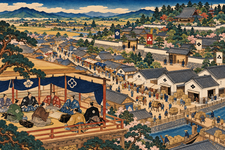
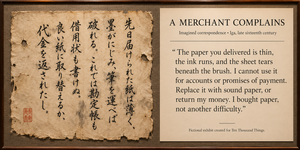
Five major merchant houses give Ueno’s commerce its shape. Around them work twenty to thirty smaller trading households, alongside brokers, carriers, shopkeepers and craftsmen. Their businesses overlap, but each possesses a particular strength: Kawahara deals in rice, Umeya arranges movement, Kanemori supplies iron, Nishikawa trades in cloth and fine goods, and Sakurai provides credit. Together they connect the province’s fields, workshops, roads and markets. A transaction beginning in a southern village may pass through all five before its consequences return to the people who grew the grain.
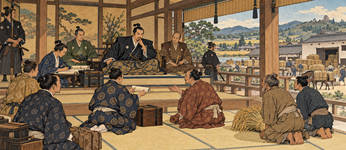
The central houses hold the places through which other men’s wealth must travel: road junctions, storehouses, cultivated corridors and staging grounds. They benefit when northern roads remain open and southern harvests reach their buyers. Peace therefore pays them, though each household has its own idea of the price others should pay to preserve it.
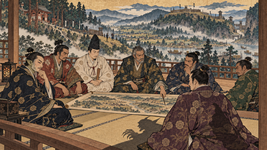
Seven houses shape northern Iga, gathering lesser warrior families around mountain holds, cultivated valleys and guarded roads. Their authority rests upon overlapping claims: inherited land, military service, marriage, shrine patronage and agreements between neighbours. No house commands enough men or wealth to dispense with the others. Their children grow up across these boundaries, sometimes as spouses, sometimes as wards whose continued residence guarantees peace.
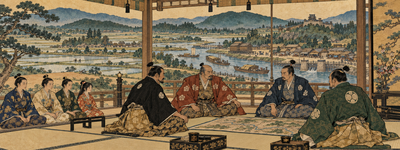
Four houses divide the cultivated valleys and flood plains of southern Iga. Between them stand five market towns, linked by a navigable river carrying rice, timber and the revenues upon which their households depend. Their peace rests upon marriages, negotiated rights and relatives living beneath another lord’s roof. These honoured guests attend lessons, practise arms and appear at ceremonies beside their hosts’ children. Everyone understands why they cannot simply go home.