
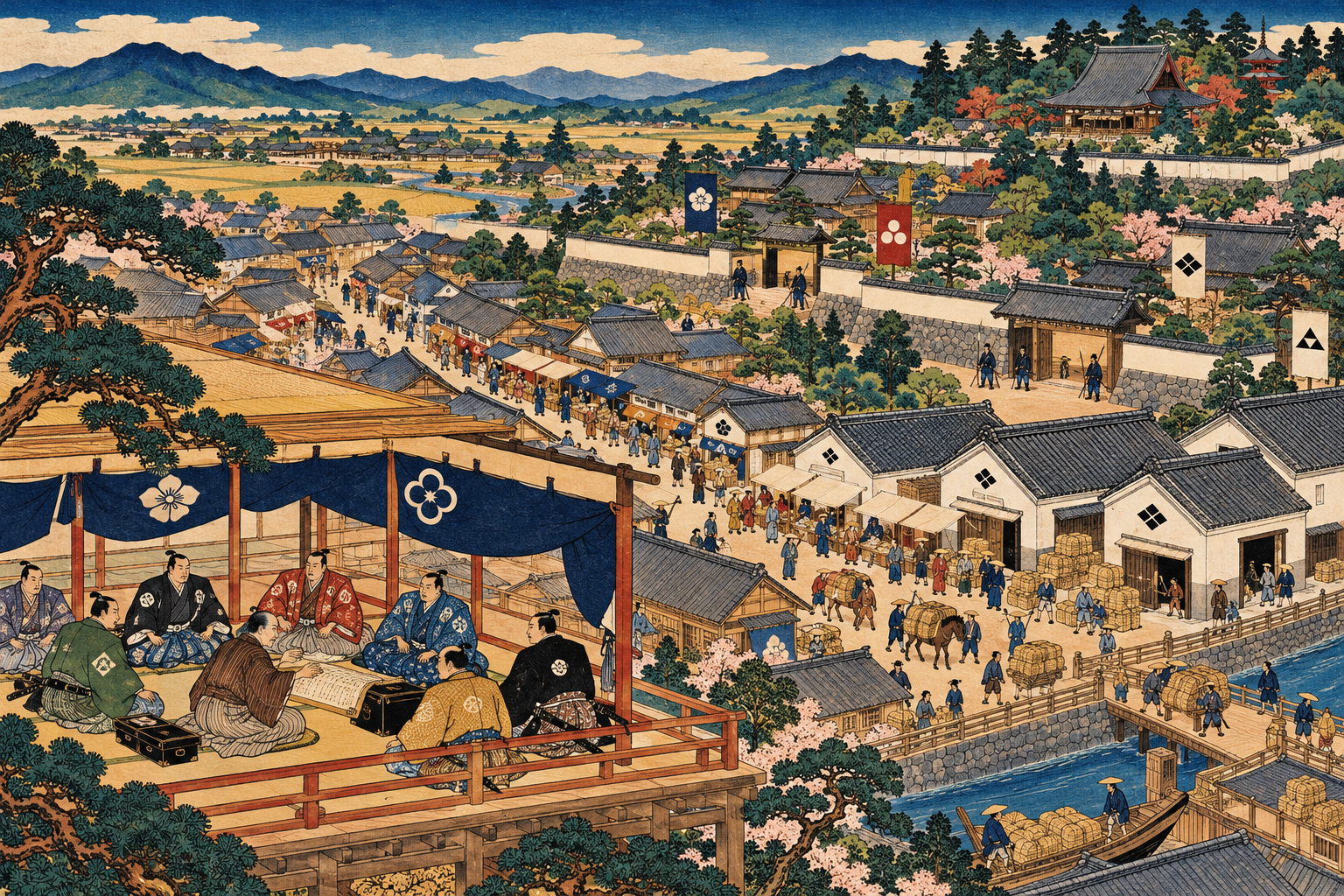
Iga-Ueno has no single ruler.
Several samurai houses keep residences, retainers and commercial interests here, sharing authority through the Iga league. Each can command his own people; none can command the whole town.
The northern lords have the strongest immediate presence. Their estates surround Ueno, their men guard its approaches, and their influence reaches into gate duties and road tolls. The southern lords maintain warehouses and agents, protecting the sale of their rice, timber and charcoal. A quarrel in the market can therefore become a quarrel between distant households.
Much of their power runs through five merchant houses: Kawahara handles rice and storage, Umeya transport, Kanemori iron and weapons, Nishikawa cloth and luxuries, and Sakurai credit. Marriage, debt and supply agreements bind these merchants to samurai patrons, but a merchant may serve several competing families.
Town elders manage ordinary business, magistrates hear disputes, and the major temple has its own standing. The oyabun command followers in particular streets and trades. A lord seeking action must often persuade these people to cooperate.
For adventurers, the difficulty is knowing whose authority applies. A lord may offer protection, but the magistrate still wants an account of the killing, the merchant wants his goods returned, and another household claims the dead man’s sword.