
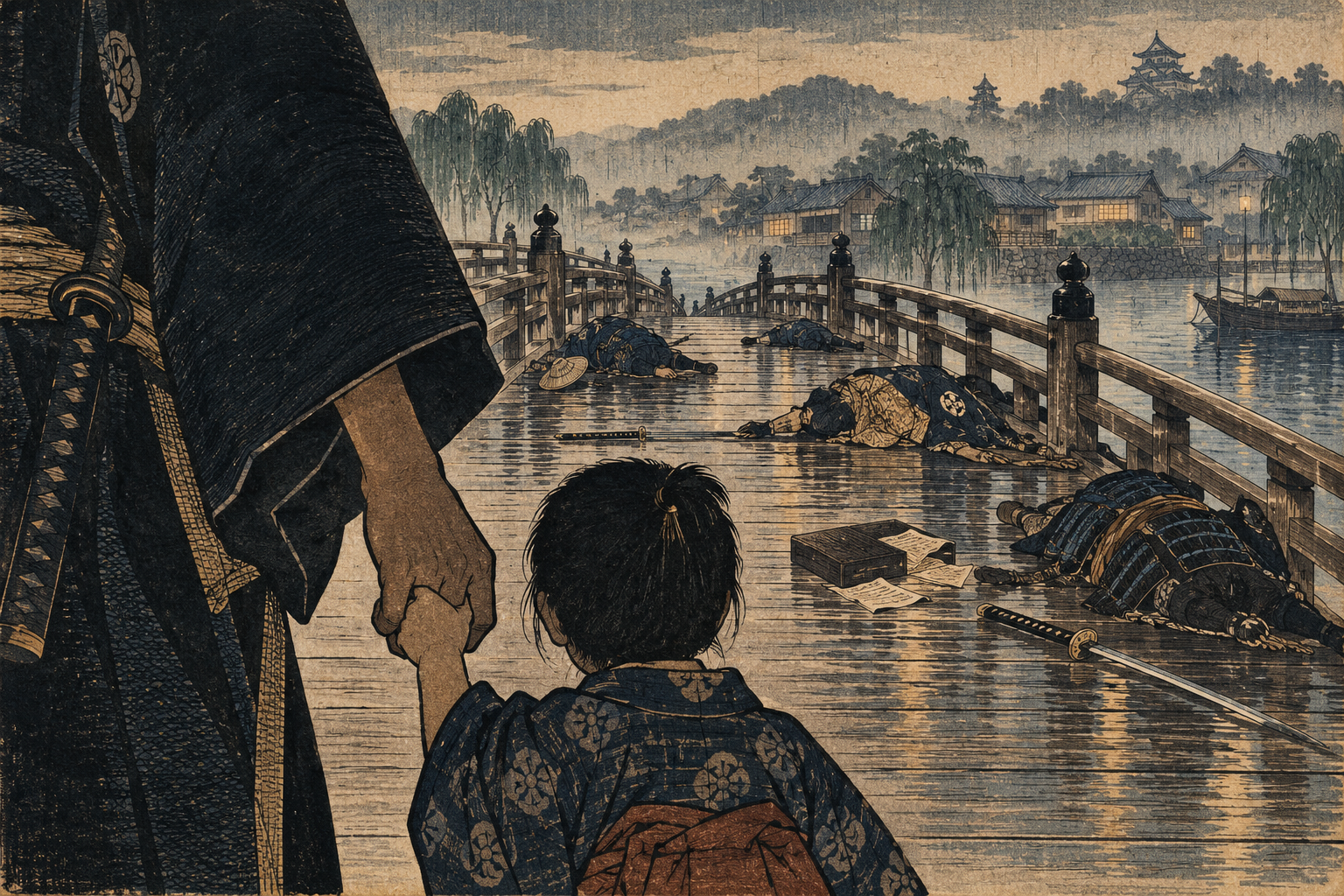
In a game, we begin with what the text tells us. Here is a villain, here is a merchant, here is somebody standing beside the road who may or may not help. But when we go looking for what else that person has, we need to give them a life from which their actions make sense. Everybody can beat out, however tenuously, their own "hero’s" journey through the tale. They can tell you what they have suffered, what they have earned, and why the thing they are doing is justified. This is called moral agency. Let them inhabit it completely. The players have their reasons for being here, but they are not the only people whose reasons count.
This applies just as much to the villain as to the good people, and to the bystanders who choose not to act. Even that choice needs looking at. Do they have the power to intervene? What might they lose if they do? Who else would bear the consequences? A man who watches an injustice may be thinking about the children who depend upon him, or remembering what happened to the last person who spoke. His silence has an effect upon the scene, whatever his reasons. Everybody’s a person, and everybody arrives with some understanding of what they can afford to do. We need to know what their apparent lack of choice means, both to them and to the people they leave without help.
The "villain" may feel he has earned the right to exercise his power over these nobodies. He has served, fought, inherited, endured, or paid for the position he now occupies. When he humiliates somebody, the people watching are part of the act. He is showing them his status, his power, and what he considers the justice of that power. He is teaching them how they should fall when support is next demanded, when somebody must be obeyed, or when somebody else can safely be abandoned. From inside his own tale, this may be the proper exercise of a deserved authority. He may even feel obliged to demonstrate it, because allowing a challenge to pass would weaken the position upon which other people depend.
Bushido is a game of status and ethics, and its rewards should give us reason to engage with those things beyond the chopping up of goblins.
Sometimes a person knows they are doing wrong. They tread the path out of shame, fear, or obligation, seeing no other way to find a good outcome for those around them. Their justification may be painful even to themselves. It is your job as GM to sell that journey in the way they speak, the things they protect, and the decisions they cannot bring themselves to make. The players will forget it, numerous times. They will see an obstacle, an enemy, or a useful person, and overlook the life that makes that person act. Sometimes that mistake will cost them within the adventure. Sometimes it will cost the story its weight, because they have missed the moment when somebody else’s sad tale crossed their own.
In Bushido, it is quite possible to miss the play of status, morality, consequence and karma while pursuing a magic sword, some treasure, or enough Budo to go up a level. That costs both the story and the game something. Anyone using these adventures should make of them what they want; your reading is your own, and your world is your own, as usual.
My intention throughout this website and the stories we play is that the primary reward should come from each character’s moral journey: the choices they make, the agency they exercise, and how those decisions carry forward through the imagined world, connecting what has happened to what happens next. If you trust that arc, you can take a path which leaves the treasure, the sword or the magic item behind. You will still receive the Budo available for that journey, the experience and the advancement, and status, because choosing what you believe you ought to do, and accepting its consequences, is the substance of the play.