
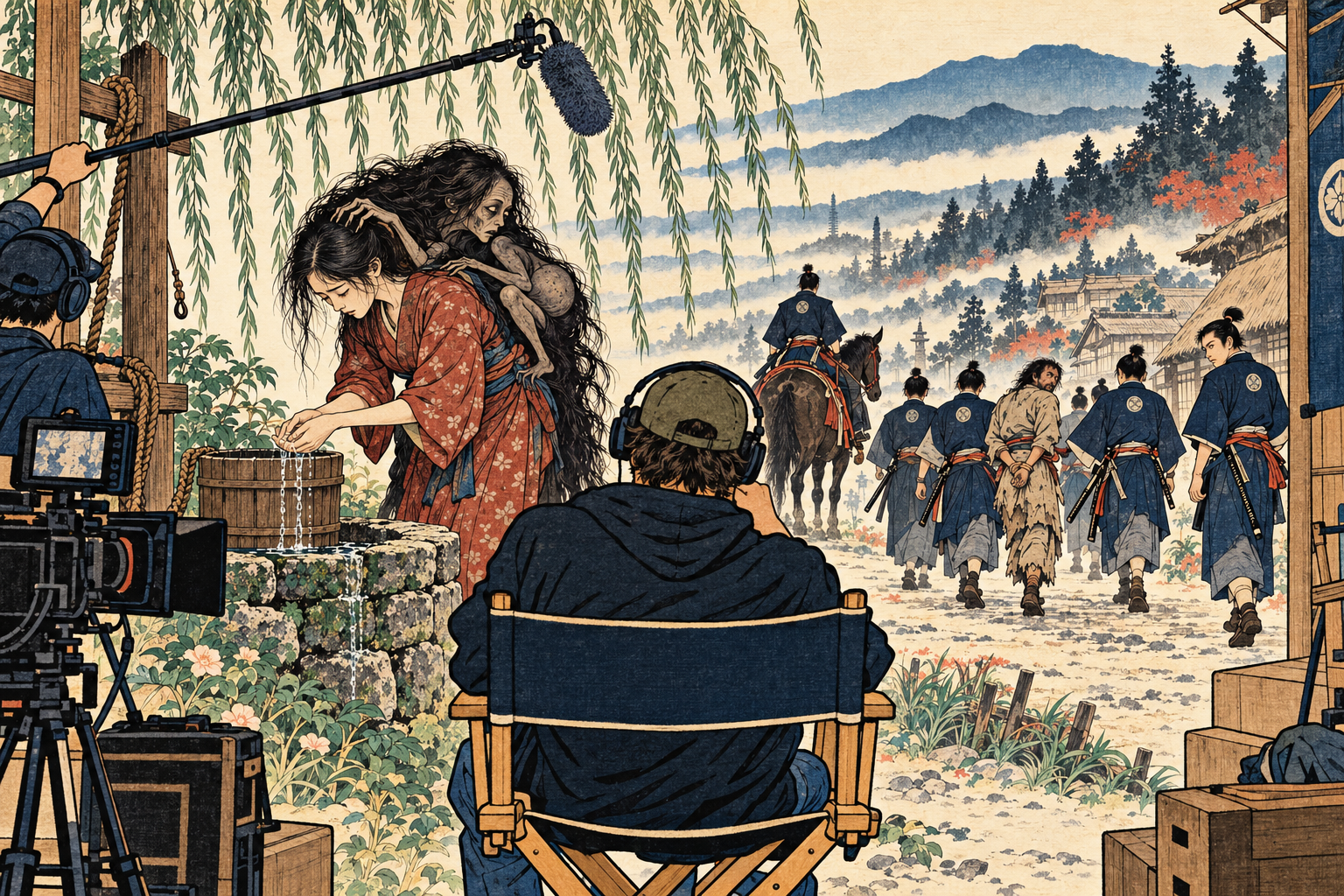
The bones of an adventure here at 10000things, are a series of discrete scenes, or nodes . A meeting at the well, an argument before a magistrate, a search through an abandoned shrine.
Each node brings together people, interests, information, and something the characters can discover, attempt, or decide. Prepare these set pieces with enough substance to support play, leaving room for different approaches and outcomes.
The story takes shape as the players find their way between these nodes.
Think of activity spreading outwards from a node. Questioning the woman at the well might reveal where the prisoner was taken, attract an escort’s attention, or bring the priest into contact with the spirit weighing upon her. Each action touches other people and places, activating possibilities elsewhere. Sketch those connections and their likely consequences: who hears about this, who responds, what becomes possible, and what grows more difficult? These give you material for later scenes as the effects of the players’ actions travel through the world.
Nodes as written have well considered routes to allow a narrative to flow between them.
The GM’s job is to help the players stitch these scenes togetherwith what the players add of themselves.
Including scenes they pitch themselves. They may want to question a servant, visit a temple, confront a rival, or gamble with the guards. Consider how each proposal connects to what is already happening and what it could set in motion. Useful information, a changed relationship, a complication, or a character’s personal ambition can all justify a scene. Follow the consequences far enough to frame the next meaningful interaction.
You do not have to play everything out. It’s boring. A pitched scence can be resolved in a sentence.
Give time to uncertainty, choices, and consequences; use exposition to carry the ordinary business between them. A few sentences can cover travel, meals, enquiries, or the arrangements for an audience.
Begin the next scene where something asks for the players’ attention, carrying forward what their earlier actions have changed. The nodes provide the adventure’s structure; the players’ choices and their spreading consequences give it movement.