
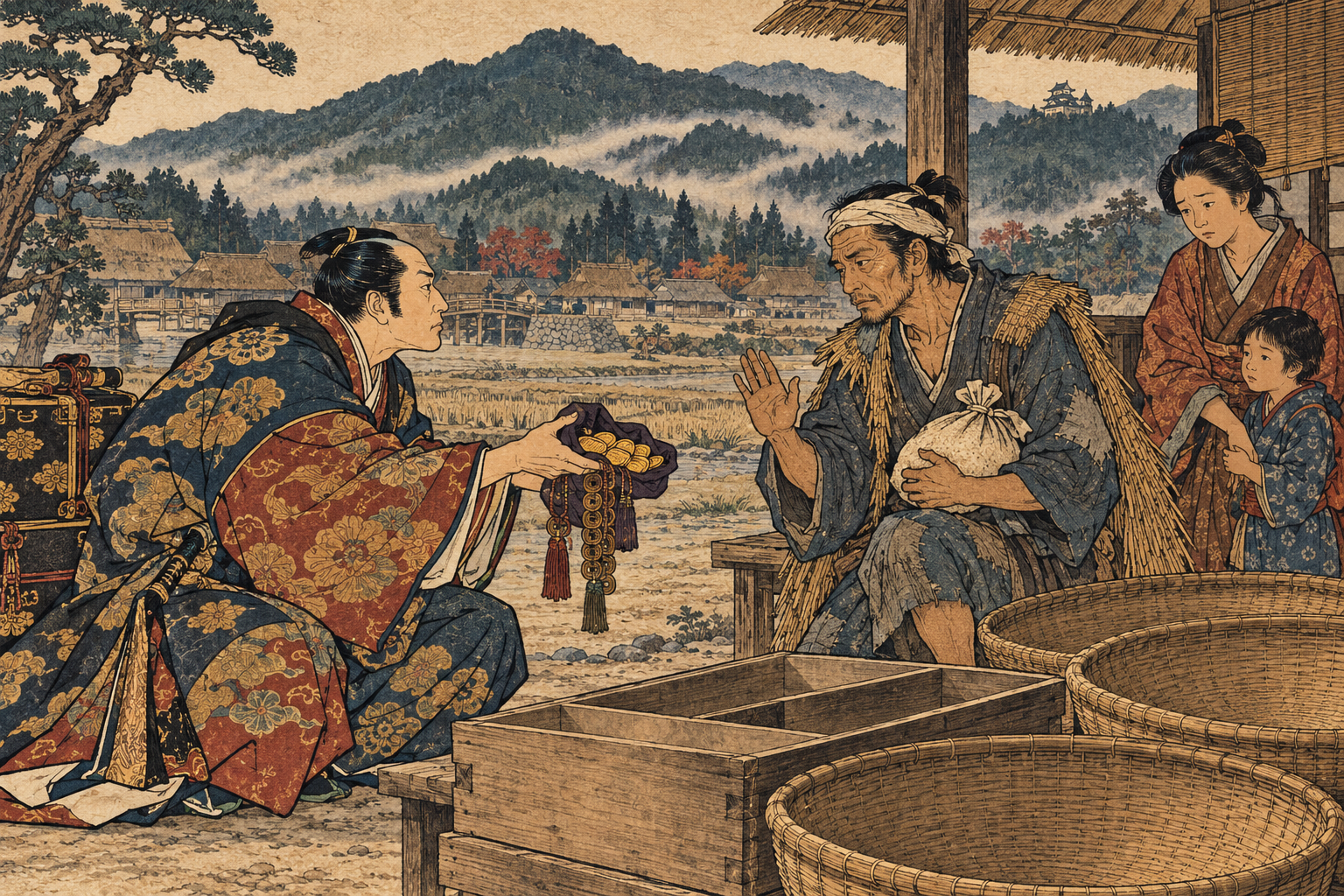
Money is not rice.
A purse of silver can buy food only while someone has food to sell. Selling grain today means trusting that more can be bought tomorrow; a failed harvest, closed pass or empty storehouse can break that promise. In the Iga setting, this uncertainty makes supplies, productive land and dependable relationships forms of wealth alongside coin.
Broadly, the limits were physical, trust, acceptance, changing value, access and political power.
Physical: There isnt enough stuff to sell.
Trust: A promise to pay was useful only while people believed it would be honoured. A merchant’s note, a lord’s debt or a claim on a future harvest could lose its value when the issuer became insolvent, died or lost authority.
Acceptance: Wealth had to take a form the seller would accept. Someone holding gold might struggle to make a small purchase when nobody could provide change. A distant merchant’s credit might mean little in a village where nobody knew him. A farmer might demand grain, tools or labour instead.
Changing value: Money did not command a fixed quantity of goods. When grain became scarce, the same silver bought less of it. An abundance of coin, doubts about its metal content or changing exchange rates could also weaken purchasing power. A debt fixed in money could remain unchanged while the food needed to survive became much more expensive.
Access: Having wealth did not mean being able to use it immediately. It might be tied up in land, goods awaiting sale, unpaid debts or an expected harvest. A prosperous household could still lack the ready money to pay carriers or buy supper.
Political power: Trade depended on what authorities permitted and could enforce. A lord could prohibit grain exports, seize supplies or compel deliveries. War could close a route; armed men could take what a merchant intended to sell. Money’s power depended partly on the protection of property and agreements.
There was also the seller’s own need: somebody with the last sack of rice might refuse any price because they needed to eat it. Money could offer a claim on future purchases, but that claim was useless if selling meant they would not survive to make them.
That awareness shapes a bargain. A farmer may refuse a generous offer because the rice must feed the household until harvest. A boatman may refuse to risk the vessel that supports his family. More money cannot always replace what would be lost. The characters must discover what makes an exchange possible: replacement supplies, protection, permission or a promise the seller can trust.
So we have a mindset that watches resources not money, and sees money as just another resource. In a city less so, in a village more so.