
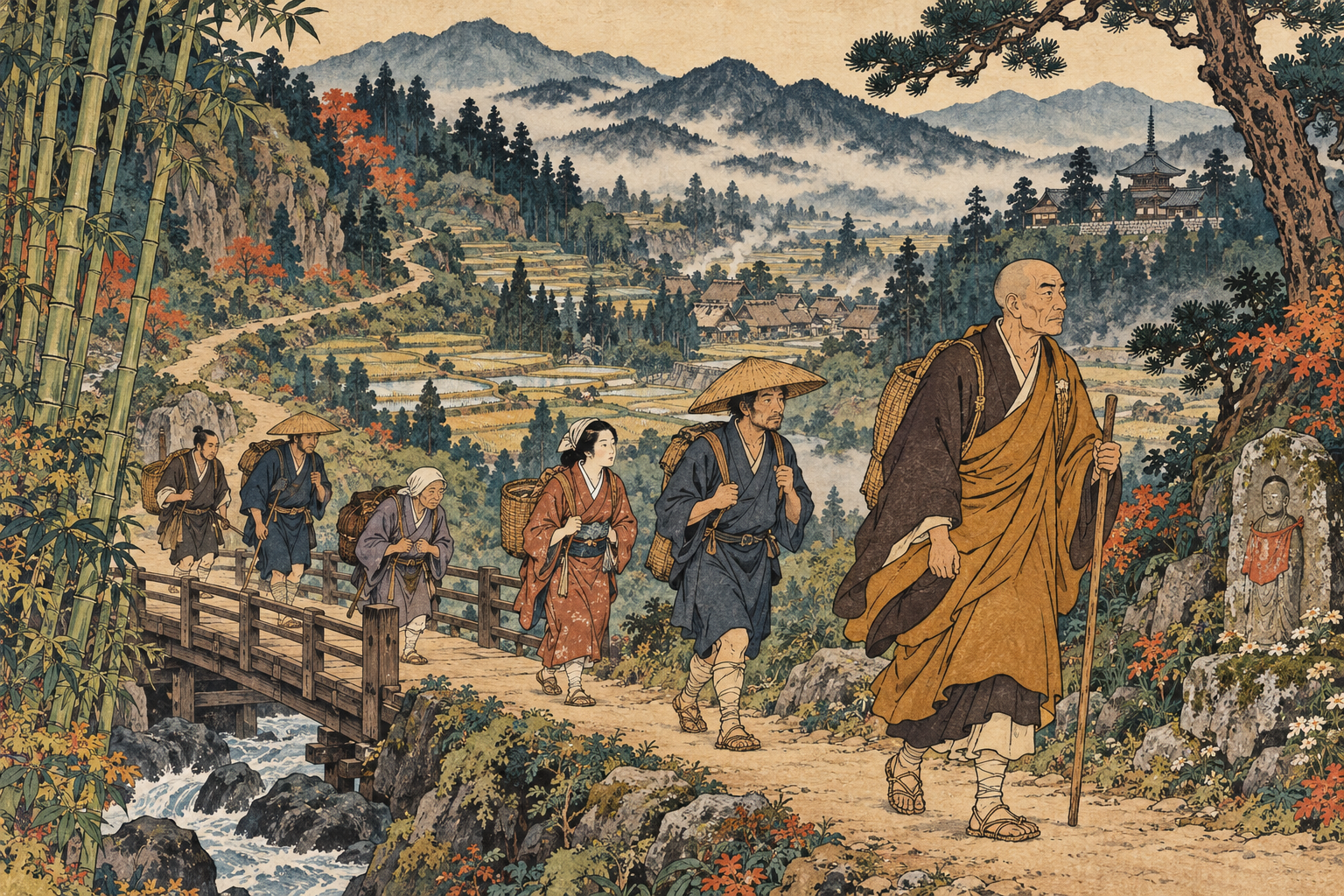
For Iga around 1580, travel depends upon local authority, the purpose of the journey and who can vouch for the traveller. There is no single passport that guarantees passage throughout Japan. The more systematic Tokugawa network of permits and checkpoints belongs to the later Edo period.
Most people travel on foot. Goods move with porters and packhorses, or by boat where waterways permit. Horses, attendants and hired transport require resources; a traveller also needs food, lodging and knowledge of the route.
For our setting, distinguish permission to leave from permission to pass:
| Journey | What makes it acceptable in the campaign |
|---|---|
| Nearby fields, villages and markets | Familiarity, ordinary business and meeting existing duties. Routine movement needn’t require paperwork. |
| A longer absence | Agreement from whoever has a claim upon the traveller’s service or labour: household, employer, military superior or local authority. |
| Trade across several territories | Recognised business connections, letters of introduction and any particular permission required along the route. |
| Pilgrimage or religious business | A credible religious purpose and connections with temples, shrines or guides. These help establish standing but do not guarantee passage. |
| Official service | A message or written authority identifying the traveller’s patron and purpose. Its force depends upon whether the receiving authority recognises that patron. |
| An armed party entering another lord’s territory | Explicit agreement or safe conduct is prudent. Numbers, weapons and allegiance make it a political matter. |
At a barrier, the question may concern payment as much as permission. Medieval checkpoints could collect tolls for powerful families, aristocrats, temples and shrines. Crossing a bridge or paying a road toll therefore needn’t mean undergoing a formal identity inspection every time. A guarded pass or fortified town presents a different problem. In the campaign, guards can ask where the travellers come from, whom they serve, what they carry and why they are entering. A letter helps establish an answer; a recognised merchant, priest or escort may help more. Wartime suspicion can override an arrangement normally accepted.
Pilgrimage provides an established reason to travel. Ise’s religious guides, called oshi, maintained connections with worshippers from the medieval period and supported pilgrimage. Religious networks could provide introductions and assistance, although a sacred destination did not automatically release someone from obligations at home.
For play, we use three questions: Can they leave their duties? Will the next authority admit them? Can they afford and survive the journey? We stablish ordinary routes the characters can use reliably, then make restrictions arise from specific circumstances—a feud, a closed crossing, a suspicious cargo or a patron whose name no longer carries favour.